
Nov 27. 2025 - Latest News
On November 27, 2025, the NRF Workshop– Talk Series, funded by the National Research Foundation of Korea (NRF) and hosted by the School of Design, Southern University of Science and Technology (SUSTech), was held in Lecture Hall 103 of the College of Business. The event brought together researchers from the University of Tokyo, KAIST, Electronics and Telecommunications Research Institute (ETRI), Jinan University, and SUSTech to discuss cutting-edge topics in virtual reality, human–computer interaction, embodiment, and wearable technologies.
This workshop was part of an ongoing international collaborative research project between the SUSTech School of Design (PIs: Asst. Prof. Seungwoo Je and Asst. Prof. Pengcheng An) and the Department of Industrial Design at KAIST (PI: Assoc. Prof. Andrea Bianchi), supported by the NRF. The collaboration has been active since 2024.
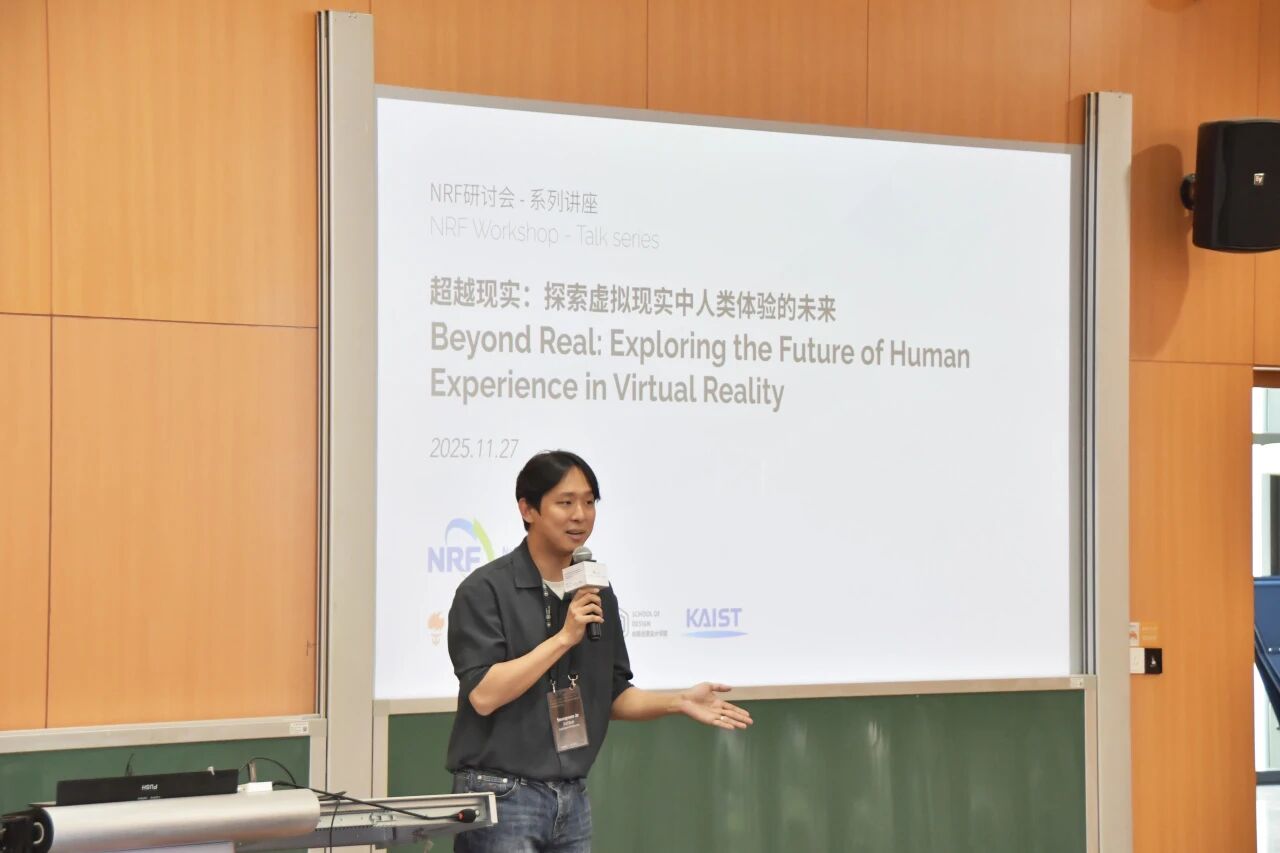
Asst. Prof. Seungwoo Je from the School of Design, SUSTech, moderates the workshop.
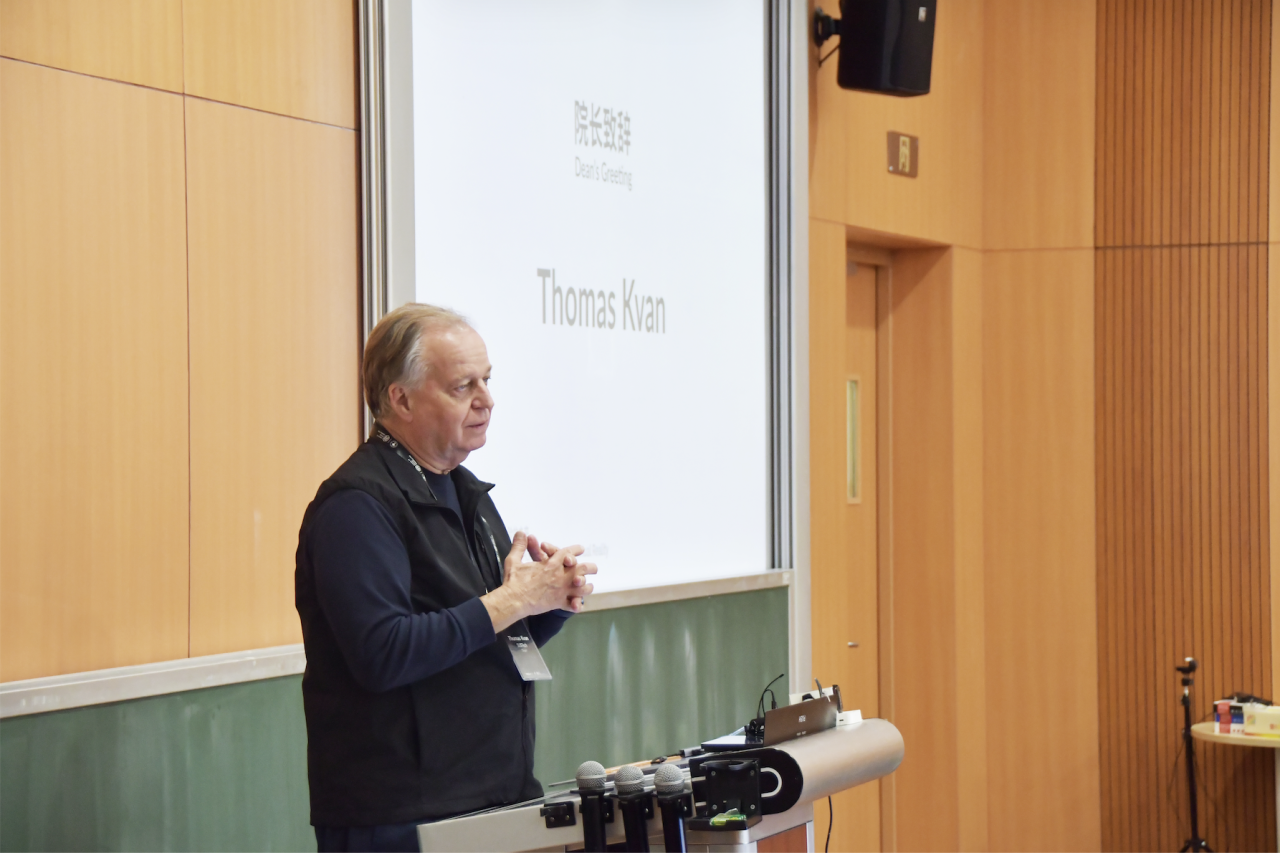
Thomas Kvan, Dean of the School of Design, SUSTech, delivers the opening remarks.
The workshop was moderated by Asst. Prof. Seungwoo Je, while Thomas Kvan, Dean of the School of Design, delivered the opening address, welcoming all invited speakers and emphasizing the importance of interdisciplinary research in advancing future interactive technologies. Following the opening address, six speakers took the stage in succession to share cutting-edge progress and insights from their respective research areas.
01|Masahiko Inami
Superhuman Sports
Prof. Masahiko Inami introduced the cutting-edge concept of “Superhuman Sports,” demonstrating how wearable devices, augmented reality, and real-time feedback systems can extend human motor abilities. He explored new forms of movement experiences created through body extension and haptic feedback, and presented several interaction examples that push beyond traditional physiological limits. His talk illustrated how such technologies can drive innovation in areas such as rehabilitation, entertainment, and human–machine collaboration.
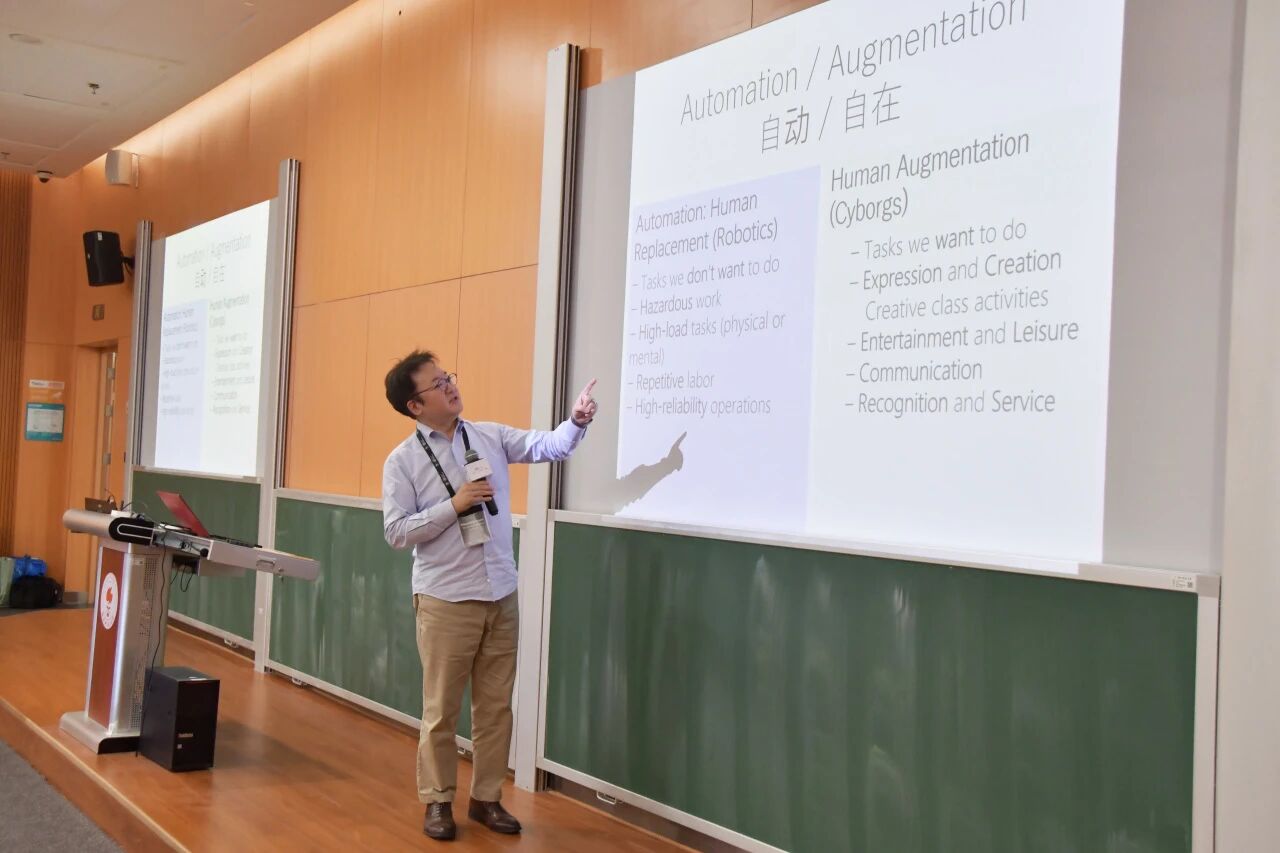
Lecture topic: “Superhuman Sports”
Masahiko Inami, Professor
Research Center for Advanced Science and Technology, The University of Tokyo
02|Andrea Bianchi
“If All You Have Is a Hammer”: Designing Digitally Augmented Physical Tools
Assoc. Prof. Andrea Bianchi approached the topic from the perspective of tool evolution, explaining how embedding sensors, collecting data, and enabling real-time visualization can give physical tools new expressive capabilities. He discussed the design notion of “making as process,” emphasizing the importance of continuous testing and refinement during prototyping. With real-time data and sensor feedback, these digitally augmented tools help designers progressively make sense of and manage the complexity of interaction systems in hands-on development.
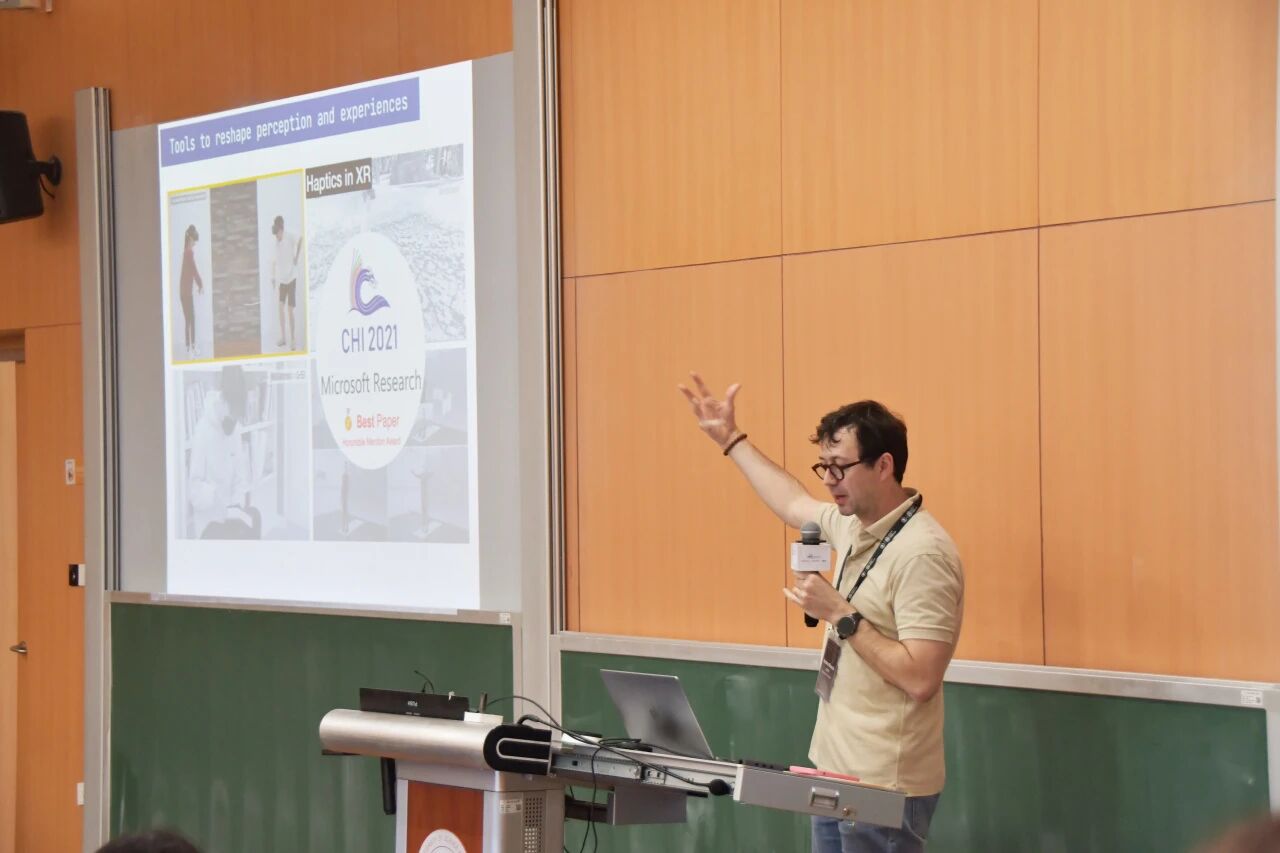
Lecture topic: “If All You Have is a Hammer: Designing Digitally Augmented Physical Tools”
Andrea Bianchi, Associate Professor
Industrial Design & School of Computing, KAIST
03|Boyu Gao
From Interaction Modeling to Behavioral Authentication: Believability in VR Interaction
Assoc. Prof. Boyu Gao shared his research in relation to the Believability Framework for trustworthy VR experiences, examining user perception, feedback mechanisms, and interaction modeling across three dimensions. He highlighted two main lines of work: body-centric locomotion and bimanual coordinated interaction, covering topics such as transfer function design, movement-time modeling, spatial haptic search, and behavioral authentication. He also demonstrated how analyzing users’ natural movement patterns in VR can enable subtle and context-appropriate identity recognition, allowing authentication to be seamlessly integrated into the overall interaction experience.
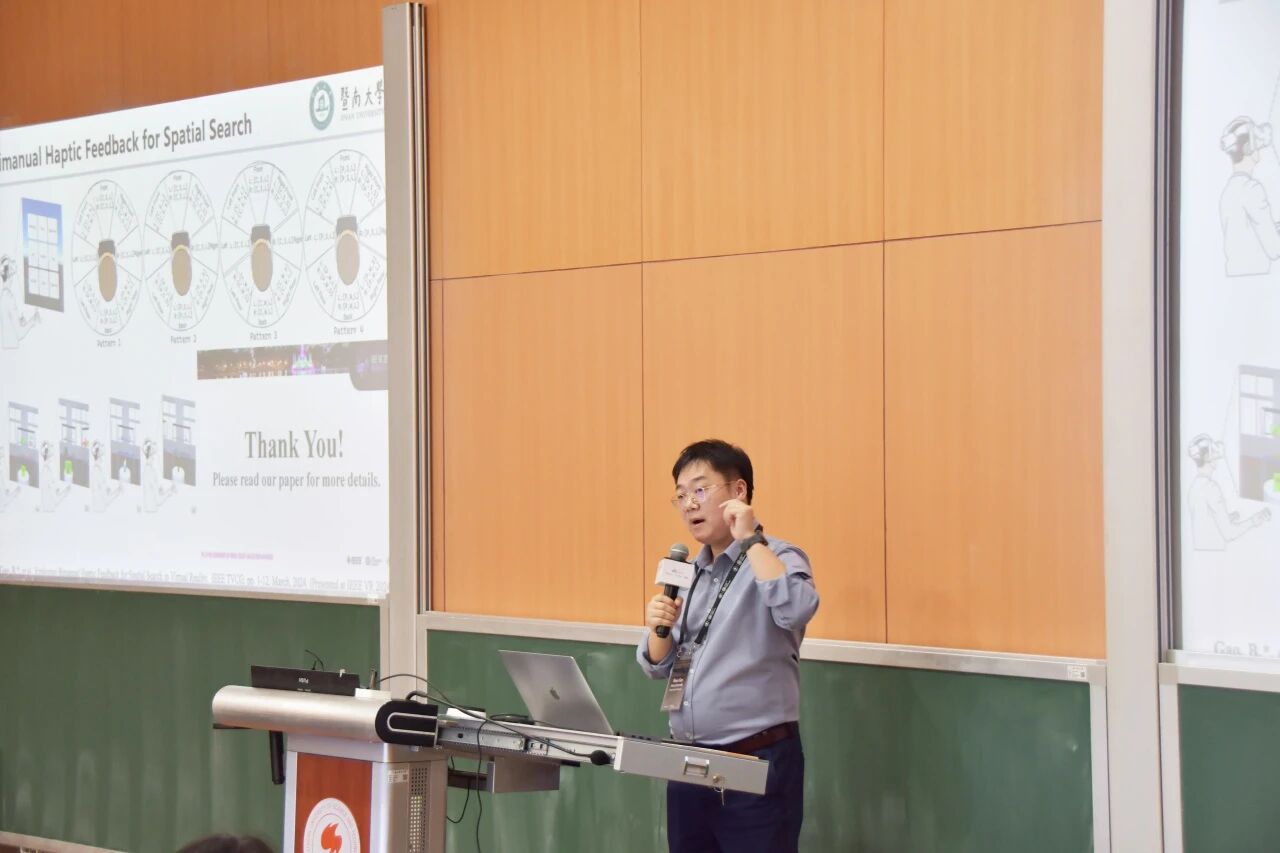
Lecture topic: “From Interaction Modeling to Behavioral Authentication: Believability/Plausibility in VR Interaction”
Boyu Gao, Associate Professor
College of Cyber Security/Guangdong Institute of Smart Education, Jinan University
04|HyeonBeom Yi
Augmented Body Parts: VR Embodiment and Wearable Robotics
Researcher HyeonBeom Yi presented the technical pathway from VR embodiment research to the design of real-world wearable robotic systems. Using supernumerary robotic limbs as an example, he explored how body augmentation can extend human motor capabilities. He highlighted the importance of sensory mapping and motor control in system design and explained how insights from VR embodiment studies can be transferred to the development of wearable robotic systems.
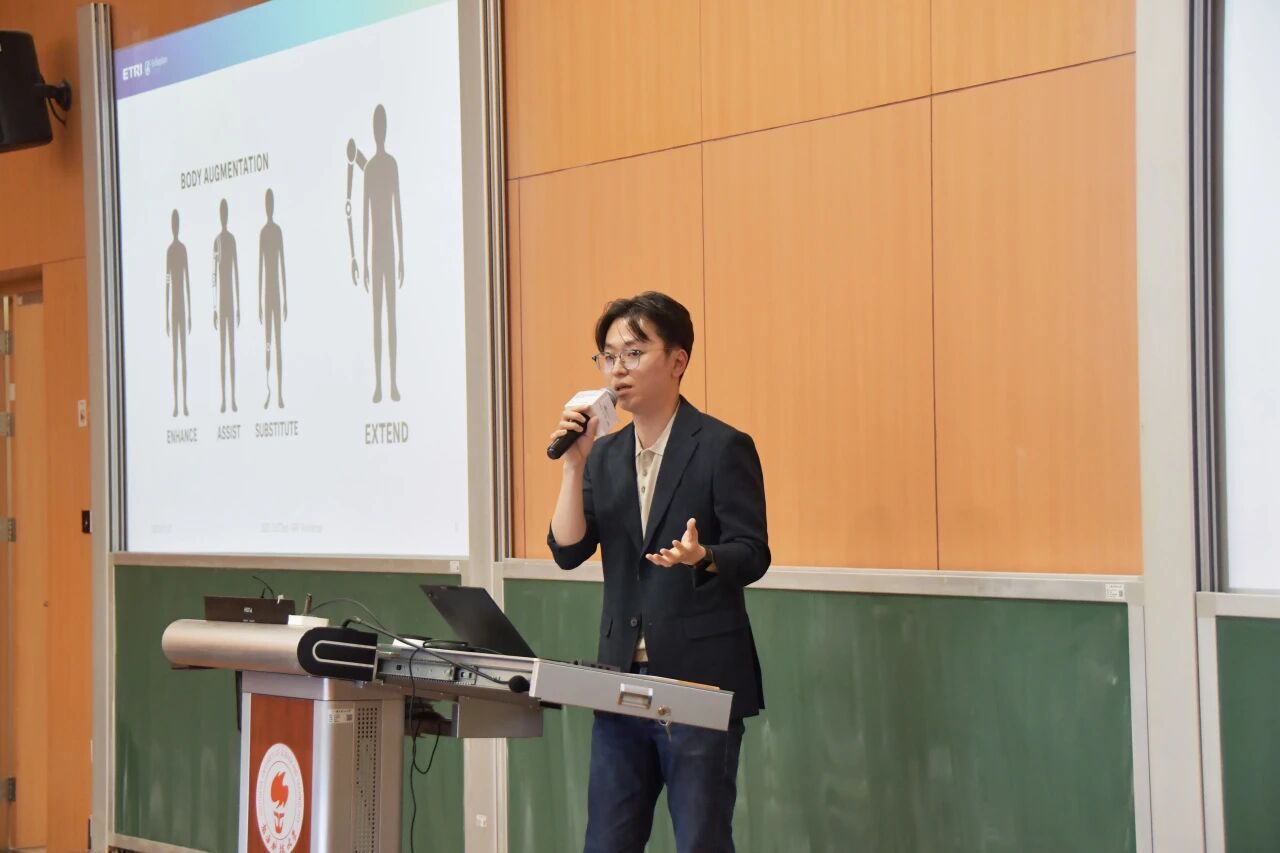
Lecture topic: “Augmented Body Parts: VR Embodiment and Wearable Robotics”
HyeonBeom Yi, Researcher
Electronics and Telecommunications Research Institute (ETRI)
05|Tao Luo
Beyond Point Studies: Transferring Interaction Techniques to Spatial Computing
Asst. Prof. Tao Luo began with the concept of “holographic experiences” to explore the potential of interaction technologies in everyday applications. He discussed how interaction details and design language can be effectively communicated in practical design contexts. He introduced a formal framework for interaction based on IxDK/IxDL and presented several representative cases, including mobile interaction toolkits, AR/VR virtual hand selection techniques, and head-controlled interaction methods.
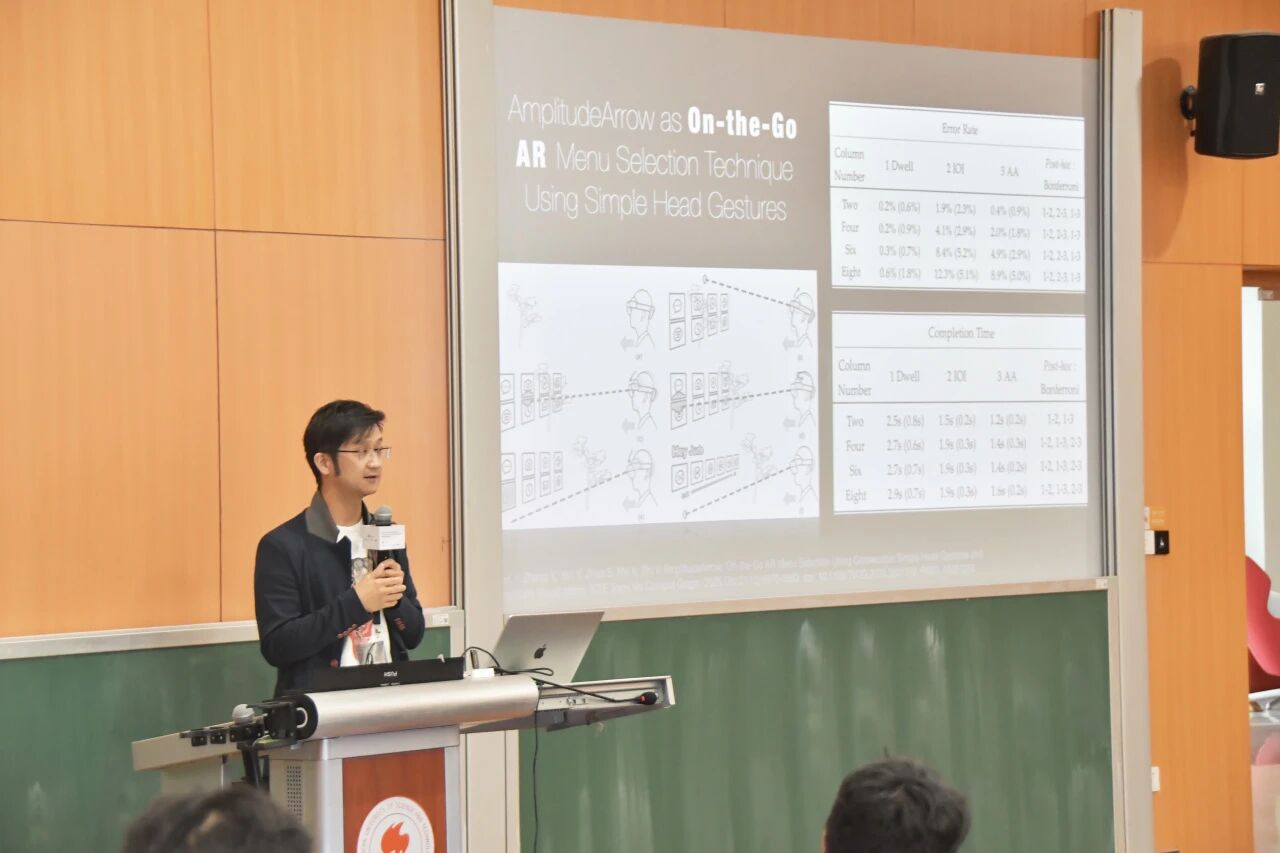
Lecture topic: “Beyond Point Studies: Transferring Interaction Technique to Spatial Computing”
Tao Luo, Assistant Professor
School of Design, SUSTech
06|Sungyong Shin
Designing a Multisensory Assistive System for Music Education of Deaf and Hard-of-Hearing Individuals
Senior Researcher Sungyong Shin presented a multisensory music learning system designed for deaf and hard-of-hearing individuals. By integrating visual cues, tactile feedback, and spatial signals, the system helps users understand rhythm and melody in music. He explained how vibration, rhythm visualization, and structured prompts are combined within the system, and demonstrated its application in real teaching scenarios, showing how multisensory experiences can effectively enhance learners’ motivation and engagement.
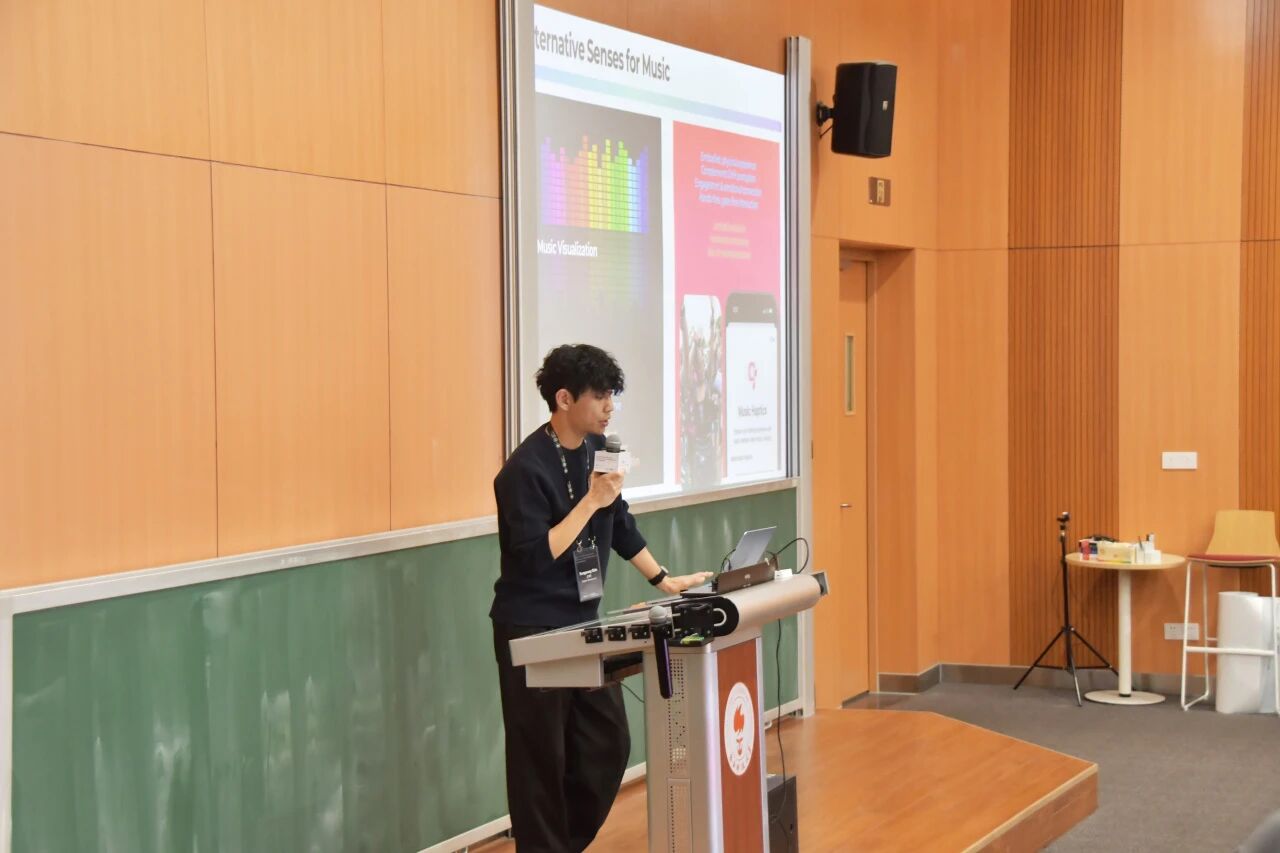
Lecture topic: “Designing a Multisensory Assistive System for Music Education of Deaf and Hard-of-Hearing Individuals”
Sungyong Shin, Senior Researcher
Electronics and Telecommunications Research Institute (ETRI)
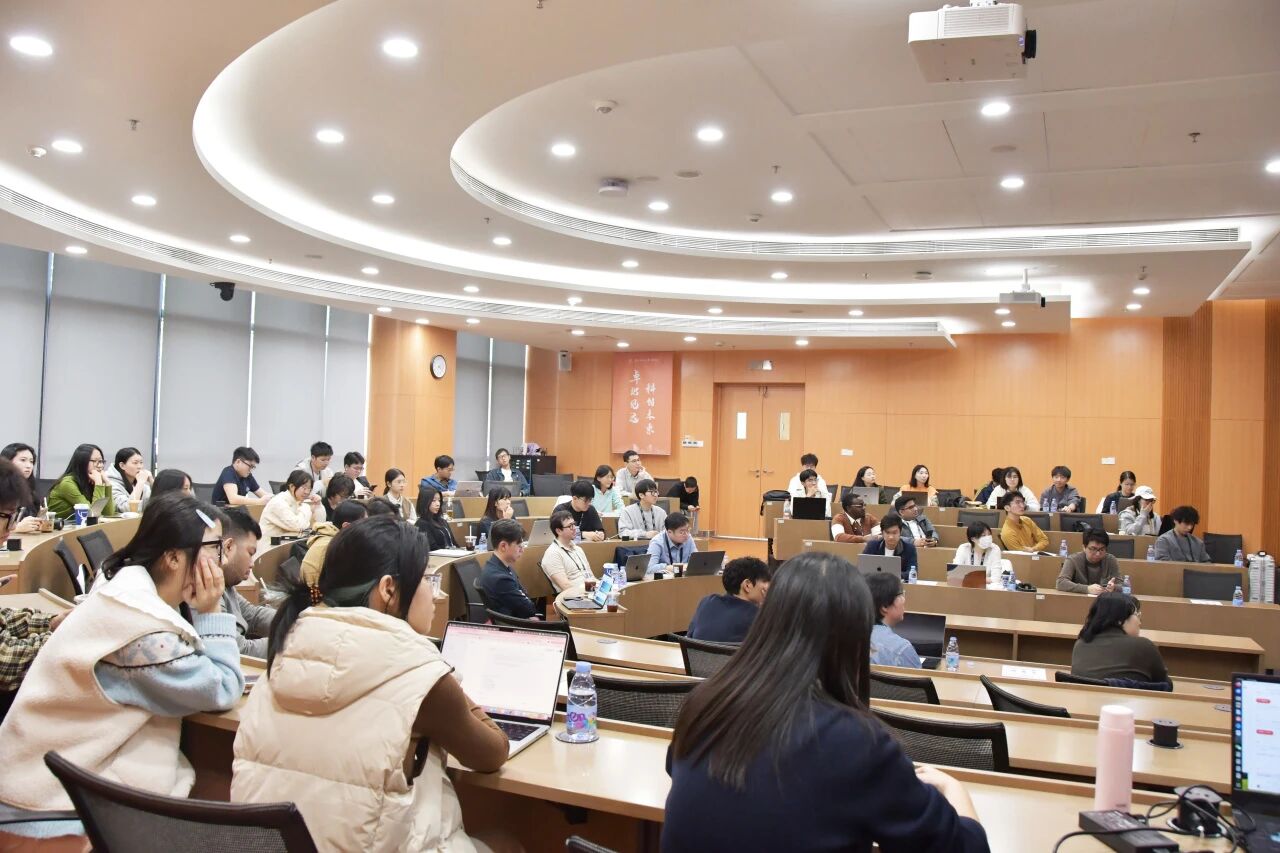
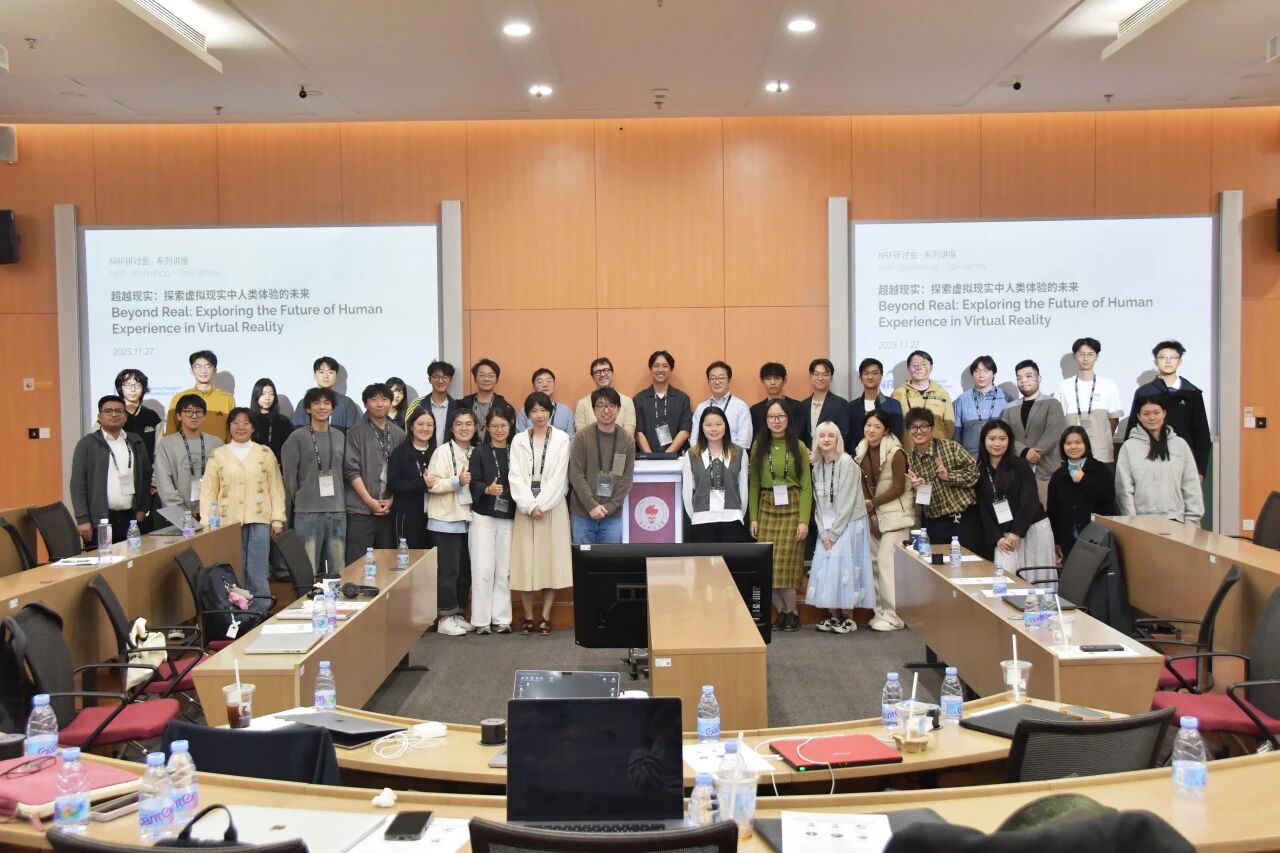
Scenes from the Lecture and Group Photo
The event attracted approximately 50 participants from both inside and outside the university, creating a lively and engaging atmosphere. Active exchanges between speakers and audience members led to meaningful intellectual dialogue and positive feedback. Following the lecture series on November 27, the School of Design organized an industry visit the next day. The delegation visited DOBOT and Seeed Studio, gaining in-depth insights into the latest developments in smart manufacturing, robotics education, and AI hardware ecosystems. The visit broadened students’ and faculty members’ understanding of industry trends and technological frontiers, providing valuable practical perspectives for learning and research in related fields.
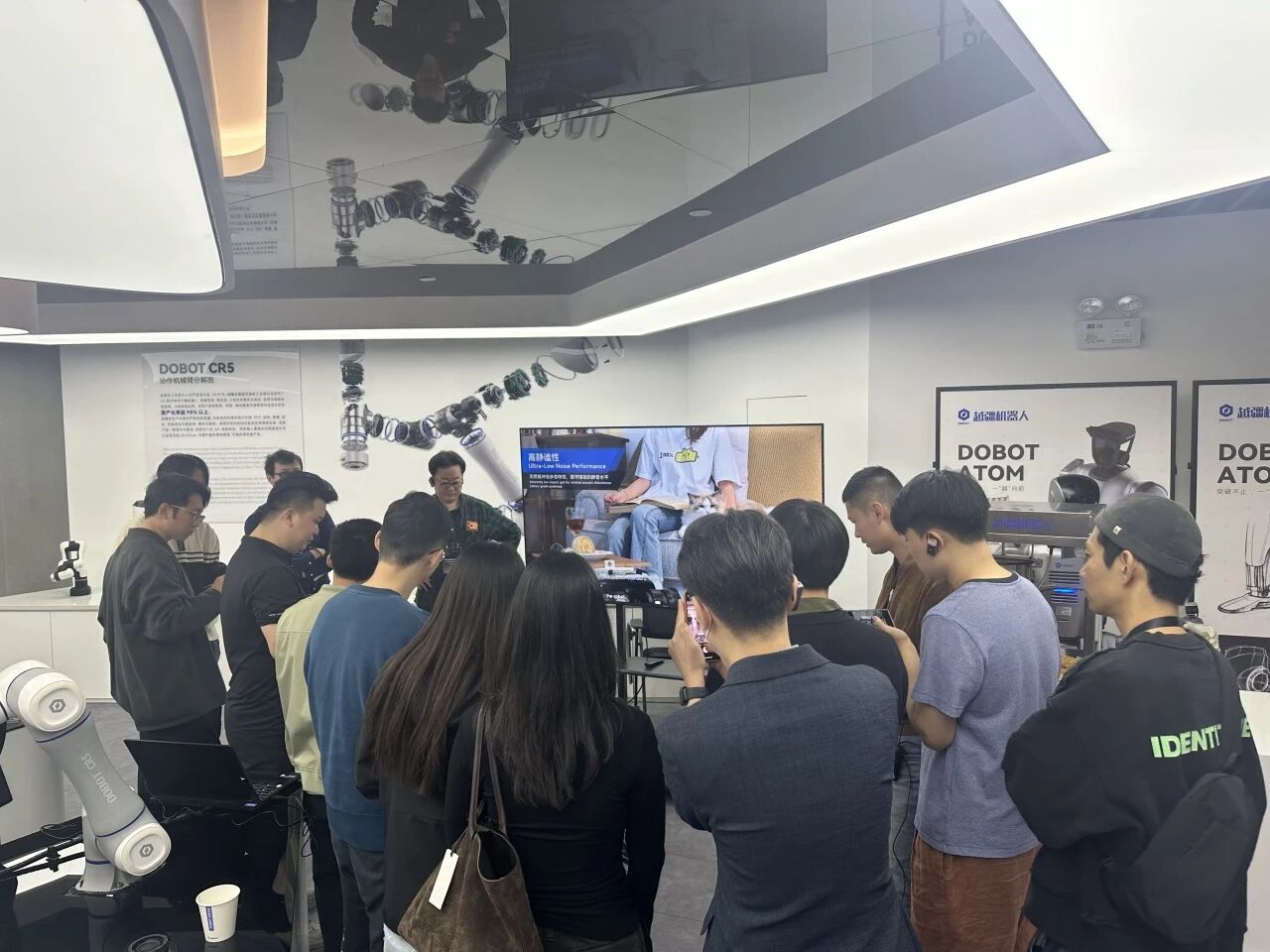
The delegation visiting DOBOT for discussion and exchange
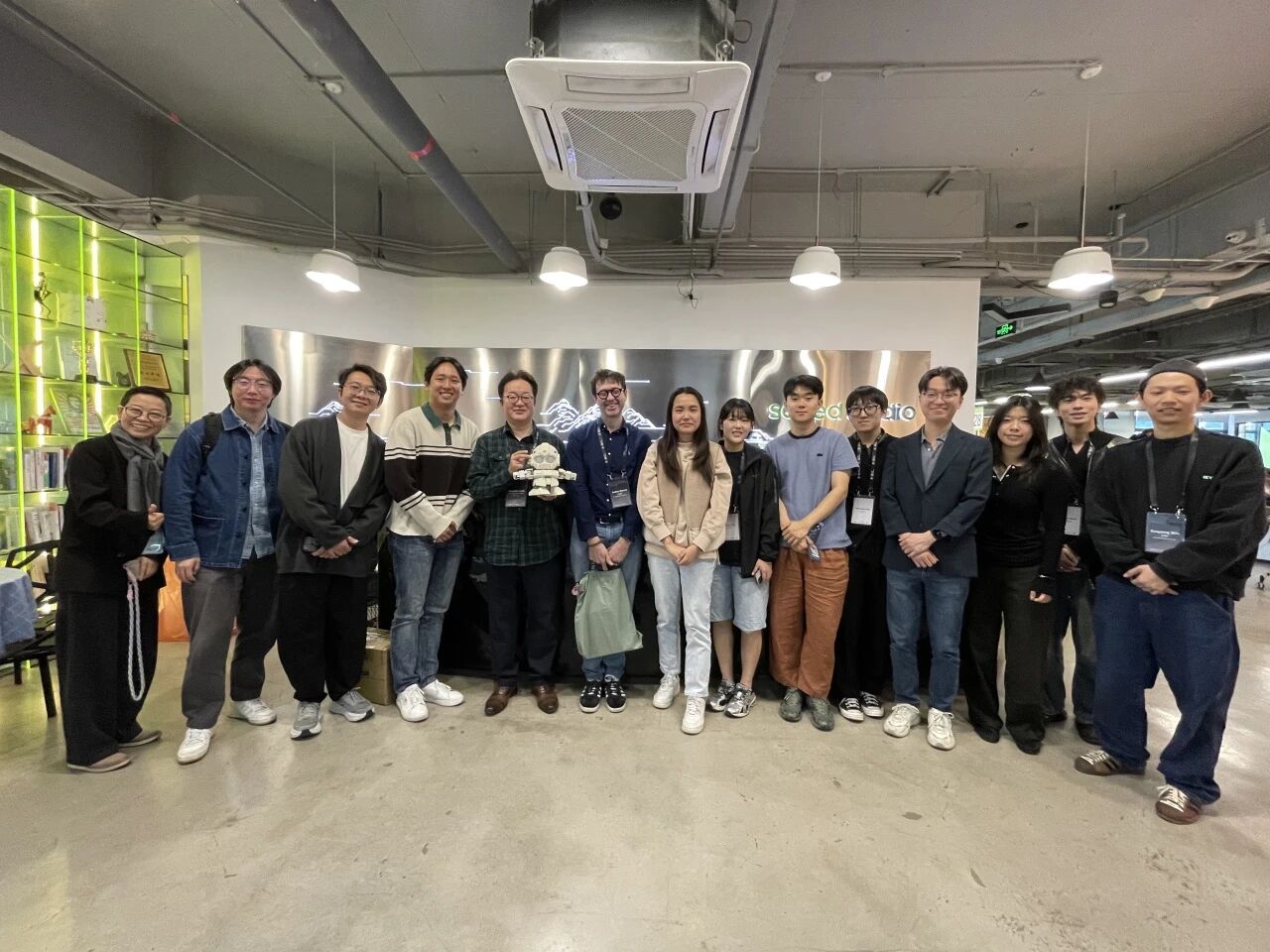
The delegation visiting Seeed Studio for discussion and exchange
The NRF lecture series and related activities concluded successfully, providing a valuable platform for students and faculty to engage with international scholars. The event also fostered cross-disciplinary exchange and collaboration in areas such as Design, VR, HCI, and wearable technologies. We believe this gathering marks a starting point for continued innovation and deeper research, and we look forward to seeing new ideas and breakthroughs emerge in more frontier technological domains.
Apr 6. 2022 - Latest News
Mar 23. 2025 - Latest News
.png)
Oct 23. 2024 - Latest News