
Jul 15. 2026 - Latest News
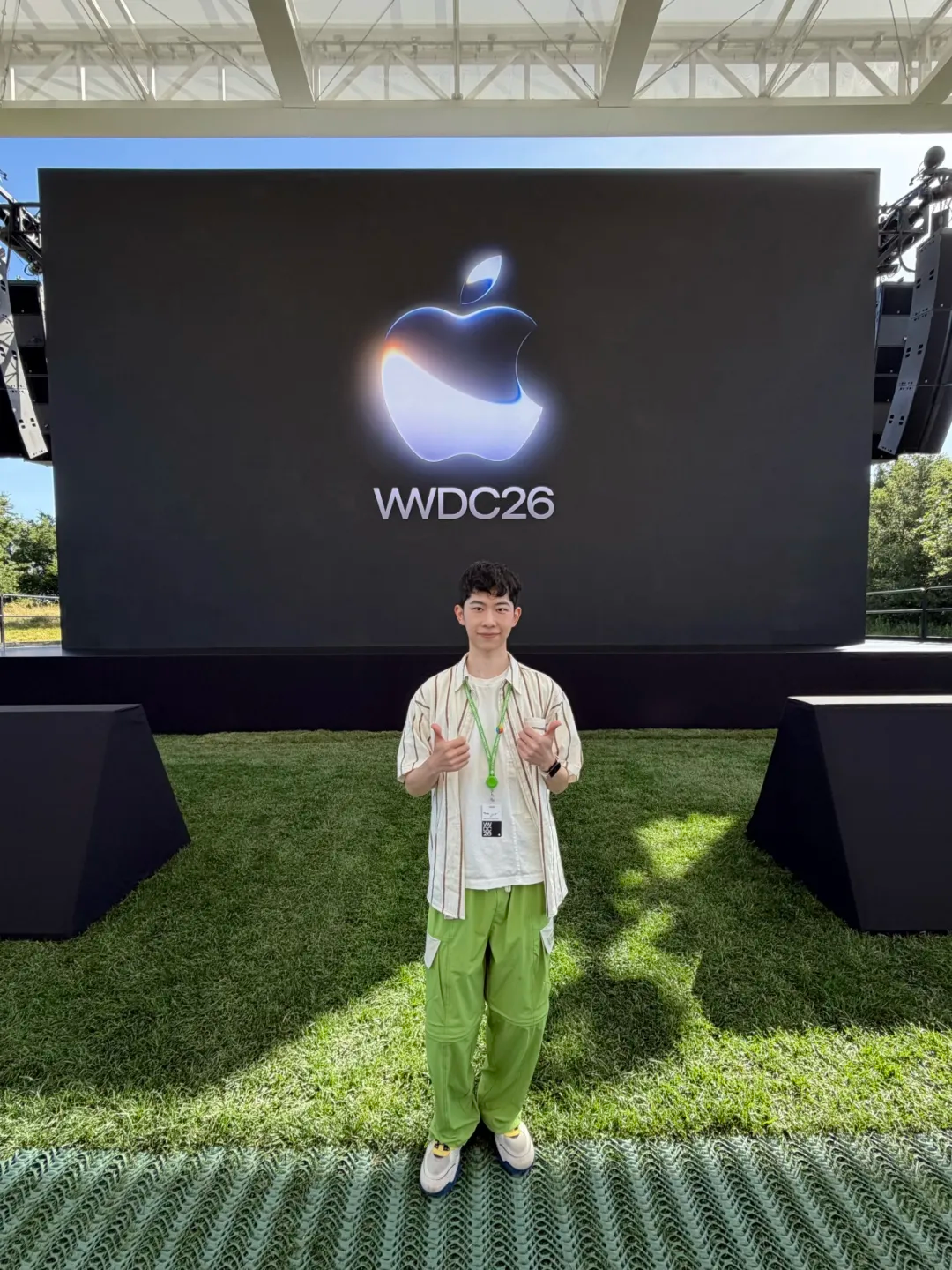
Wu Tianyu at WWDC26
In June 2026, Tianyu Wu, a PhD student at the SUSTech School of Design, was named a Distinguished Winner of the Swift Student Challenge 2026 for his project MagiBotics. He was subsequently invited to Apple Park to attend the Apple Worldwide Developers Conference (WWDC26), where he shared his project with developers from around the world.
The award reflects not only Wu’s sustained experience in developing for Apple platforms, but also his innovative approach to using design to engage with emerging technologies and transform complex systems into experiences that people can understand, perceive, and participate in.
The Swift Student Challenge is an annual competition organized by Apple for student developers worldwide. It encourages students to use Swift to create original and interactive App Playgrounds that demonstrate their creativity and coding skills while helping them acquire practical capabilities that can be applied in a wide range of contexts. This year, 350 winners from 37 countries and regions received awards, with 50 Distinguished Winners invited to Apple Park for the Worldwide Developers Conference.
This was neither Wu’s first time developing an app nor his first success in the competition. His interest in the world of apps began in 2012, when he received his first iPad. After entering university in 2019, he began studying Swift systematically and wrote his first line of code in Xcode. In 2022, he independently developed and released his first app, Daily Penny. He won the Swift Student Challenge for the first time in 2025, before returning to Apple Park in 2026 as a Distinguished Winner with MagiBotics. His journey represents a path of growth that began with personal curiosity and gradually expanded into academic research and development practice.
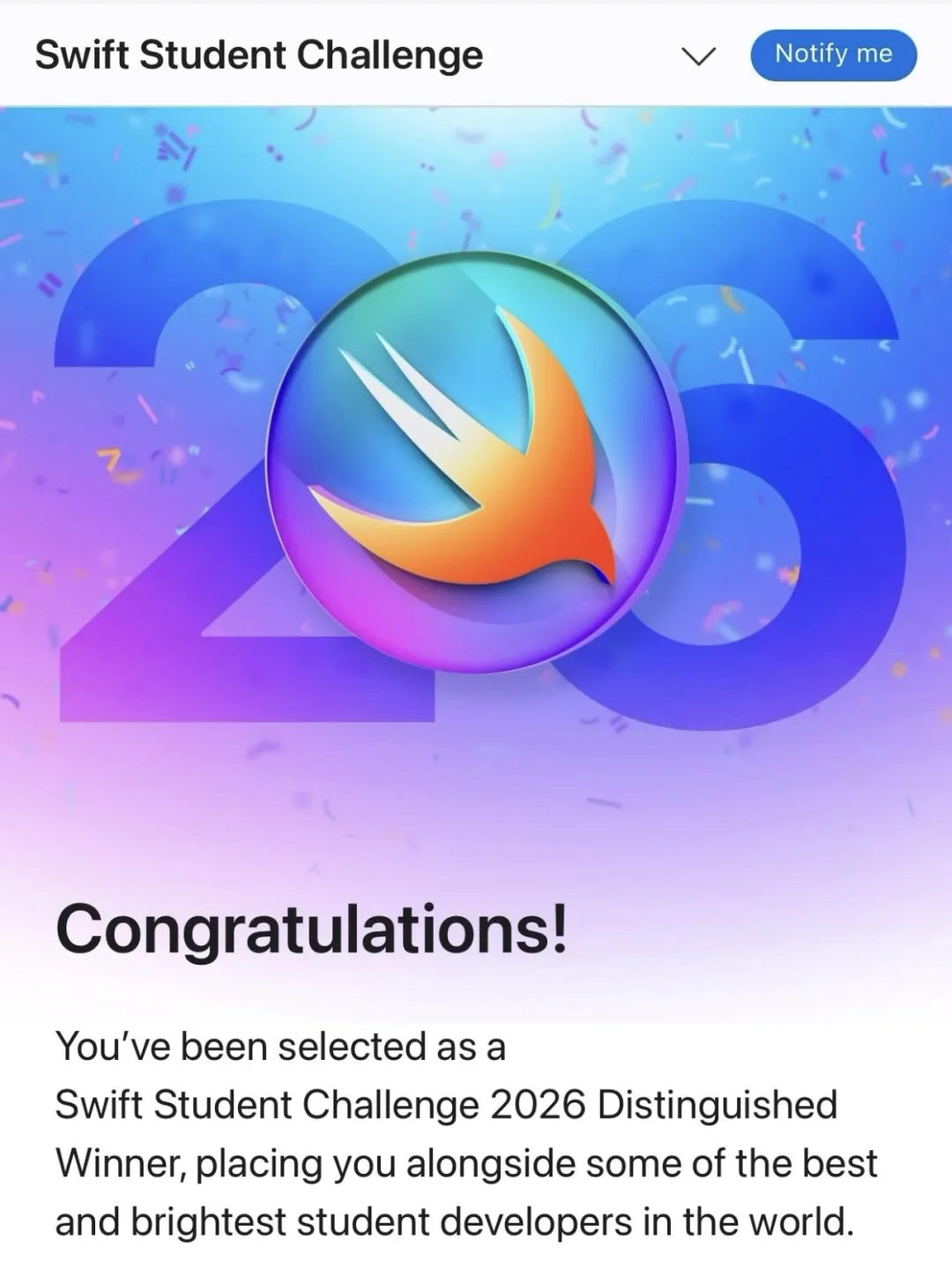
Wu Tianyu’s award notification
Wu’s 2026 award-winning project, MagiBotics, is a robotics laboratory game designed for the iPad. Featuring three levels, the game transforms fundamental robotics concepts, including joint control, goal-directed movement, and inverse kinematics, into intuitive interactive experiences. It also incorporates technologies such as Vision, Speech, and RealityKit, enabling users to understand the logic of robotic movement through gestures, voice commands, and spatial interaction.
While MagiBotics focuses on addressing the steep learning curve that often makes robotics inaccessible to the general public, Wu’s 2025 award-winning project explored the practical challenges of collecting robotics data. In that app, users operate an underwater robot in an augmented reality environment to collect marine debris, while data such as the robot’s position and orientation are recorded.
Although the two projects differ in their presentation, they share the same objective: to help users encounter and understand robotics through gamified, interactive experiences while collecting relevant motion data as the robots perform tasks.
“They actually use the same underlying technical framework, and some of the foundational code and principles can be reused,” Wu explained.
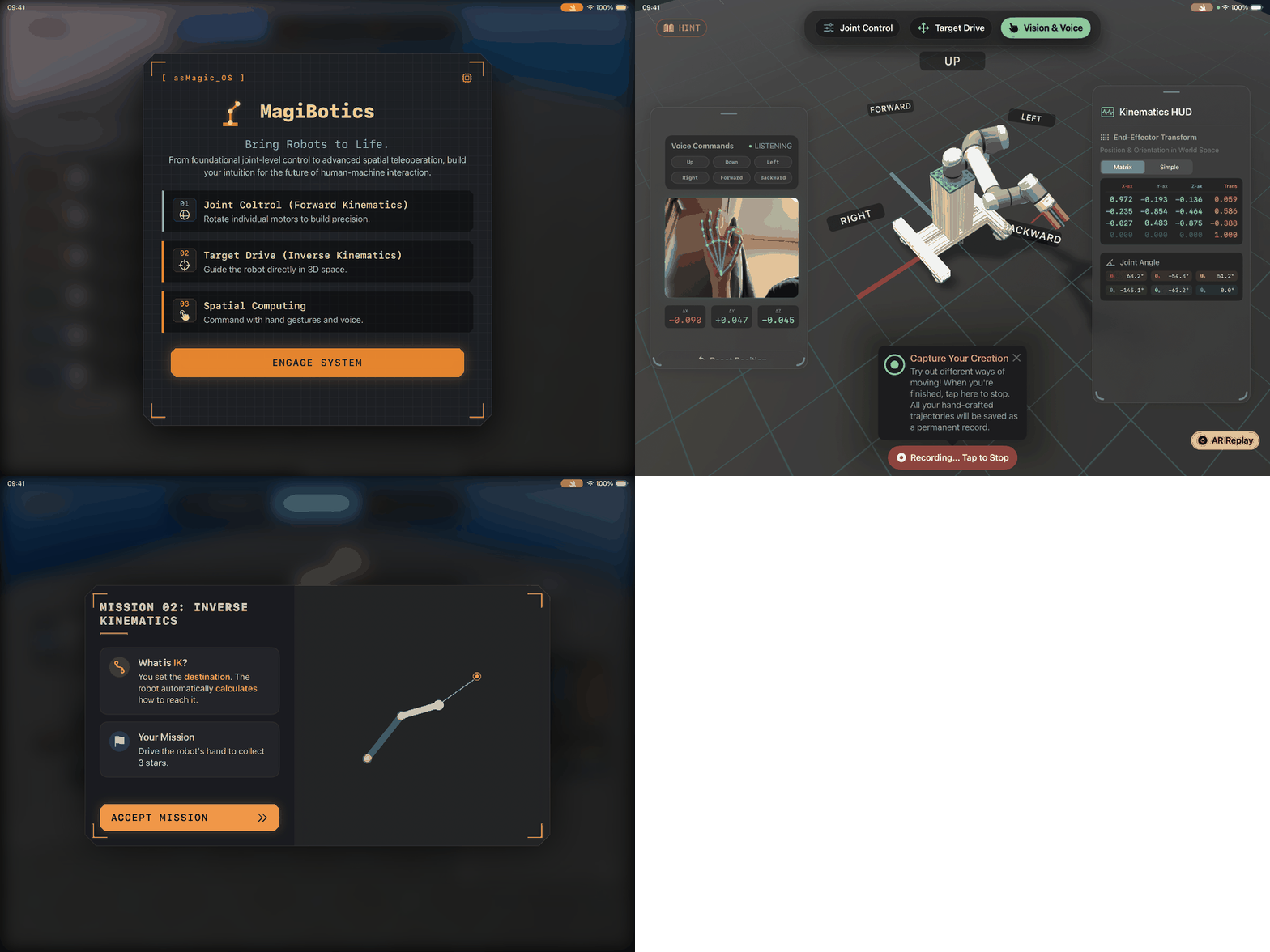
Interface of MagiBotics, Wu Tianyu’s 2026 award-winning app
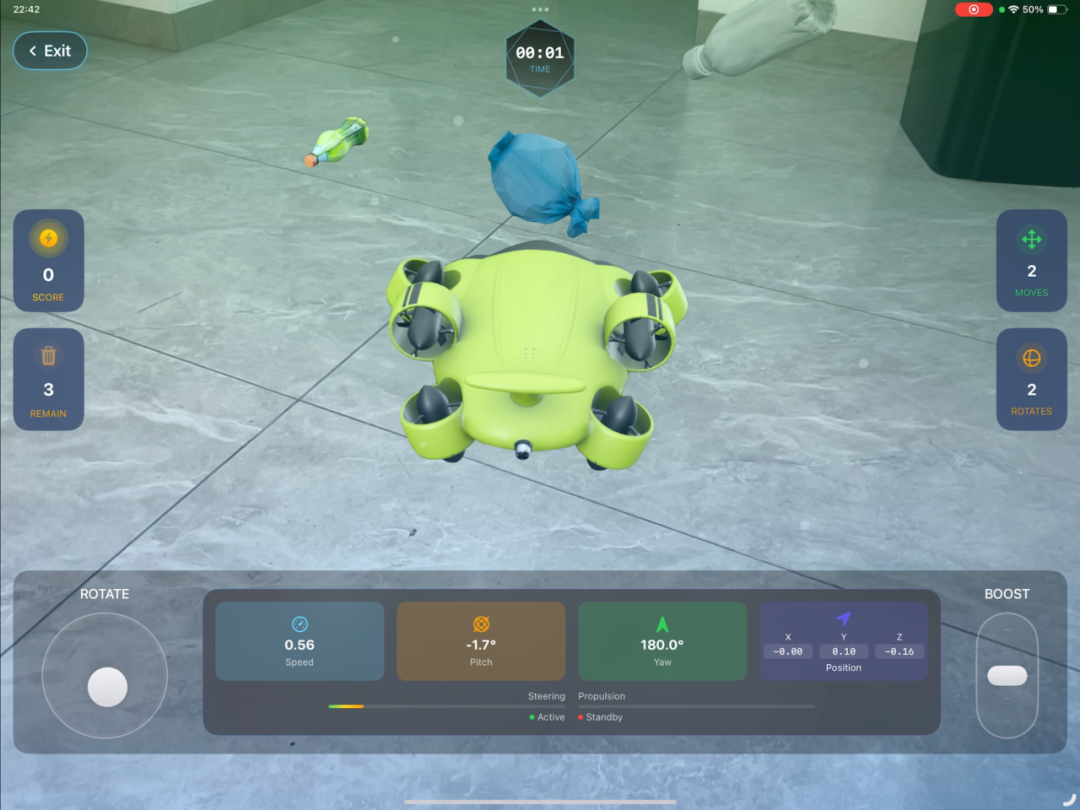
Interface of Wu Tianyu’s 2025 award-winning app
In Wu’s vision, robots should not remain confined to laboratories. Instead, they should first enter the public sphere in forms that are easier to understand and experience. Robotics involves many abstract concepts, and Wu believes that the value of gamified design lies precisely in its ability to transform complex knowledge into experiences in which anyone can participate.
“I want to bring robots to everyone’s phone or iPad and into people’s homes, so that they can first encounter and learn alongside robots through games,” Wu said.
For robots to become genuinely integrated into domestic life and undertake complex tasks such as cooking and folding clothes, however, they need to be supported by large quantities of real-world data. Wu has therefore been exploring ways to bring data-collection methods that were previously limited to factories and laboratories into everyday settings, allowing more members of the public to take part.
This idea is closely connected to his academic research. Wu is currently pursuing a PhD in Intelligent Manufacturing and Robotics at the SUSTech School of Design. He is also a founding member of the technology research and development company AncoraSpring. Established in September 2025, the company aims to bring machine intelligence into a broad range of industries and households by developing accessible intelligent robots and an accompanying application ecosystem.
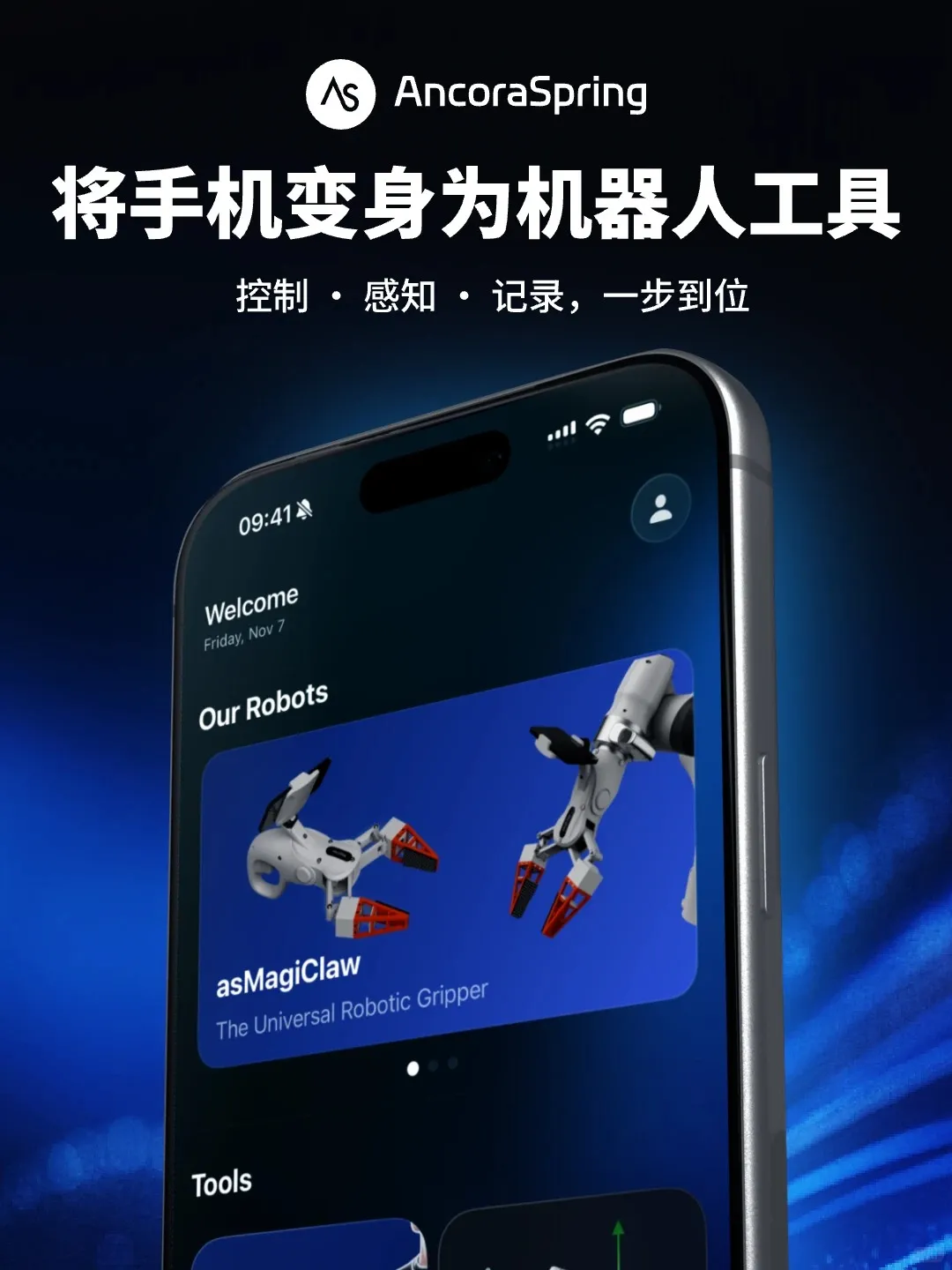
Announcement of the asMagic app launch on AncoraSpring's Rednote account
Working toward this goal, Wu and his team are developing an end-to-end robotics technology system built around “embodiment, data, and intelligence.” They have launched products including asMagic, asOverDog, and asMagiClaw to address personalized application needs across a variety of scenarios.
Among them, asMagic is an application closely connected to robotics research. It turns an iPhone or iPad into a sensor and interactive interface for a robot, collecting motion, image, and other forms of data to help robots learn more complex real-world tasks.
Wu does not regard academic research and entrepreneurship as two separate paths. Instead, he believes they often transform and reinforce one another.
“I wouldn’t call it a change of identity. I currently have two identities: I am both a student and an entrepreneur,” he said.
His progression from personal interest to research, development, and product practice represents a sustained form of exploration. By extracting elements from his academic work and transforming them into projects that are easier for the public to understand, Wu has established a natural connection among research, design, and development.
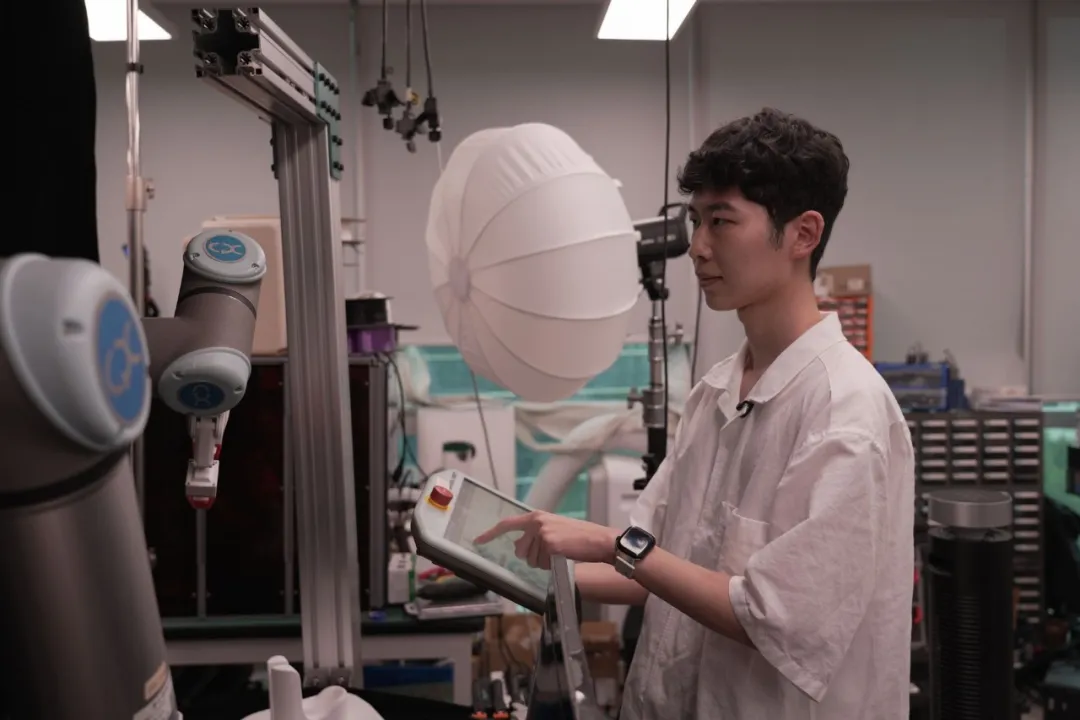
Wu Tianyu in the laboratory
For Wu, attending WWDC26 after receiving the award was more than an opportunity to present his work. It also provided firsthand insight into technological trends, the developer ecosystem, and the value of design.
During the showcase at Apple Park, he introduced his project to Apple CEO Tim Cook and incoming Apple CEO John Ternus, inviting them to try the game themselves. When he demonstrated how an augmented reality robotic arm could be projected into a real-world environment, he heard them respond with an impressed “wow.”
“At first, I didn’t know that Cook and Ternus would be coming together. I felt very proud to have the opportunity to introduce my app to them,” Wu recalled.
When Wu first visited Apple Park as a winner in 2025, he was primarily filled with excitement. This year, however, he paid closer attention to the design details throughout the campus: the curved treatment of staircase corners, the precision of the tilework, and the highly consistent visual and experiential language of the employees’ working environment.
These observations gave him a more immediate understanding that technological products must do more than simply function. They must also develop a coherent language of experience, aesthetics, and expression.
At the same time, Wu met student developers from around the world and encountered projects spanning music creation, education, machine learning, and social issues. In his view, the most compelling projects are defined not only by their technical execution, but also by the originality of their ideas and creativity.
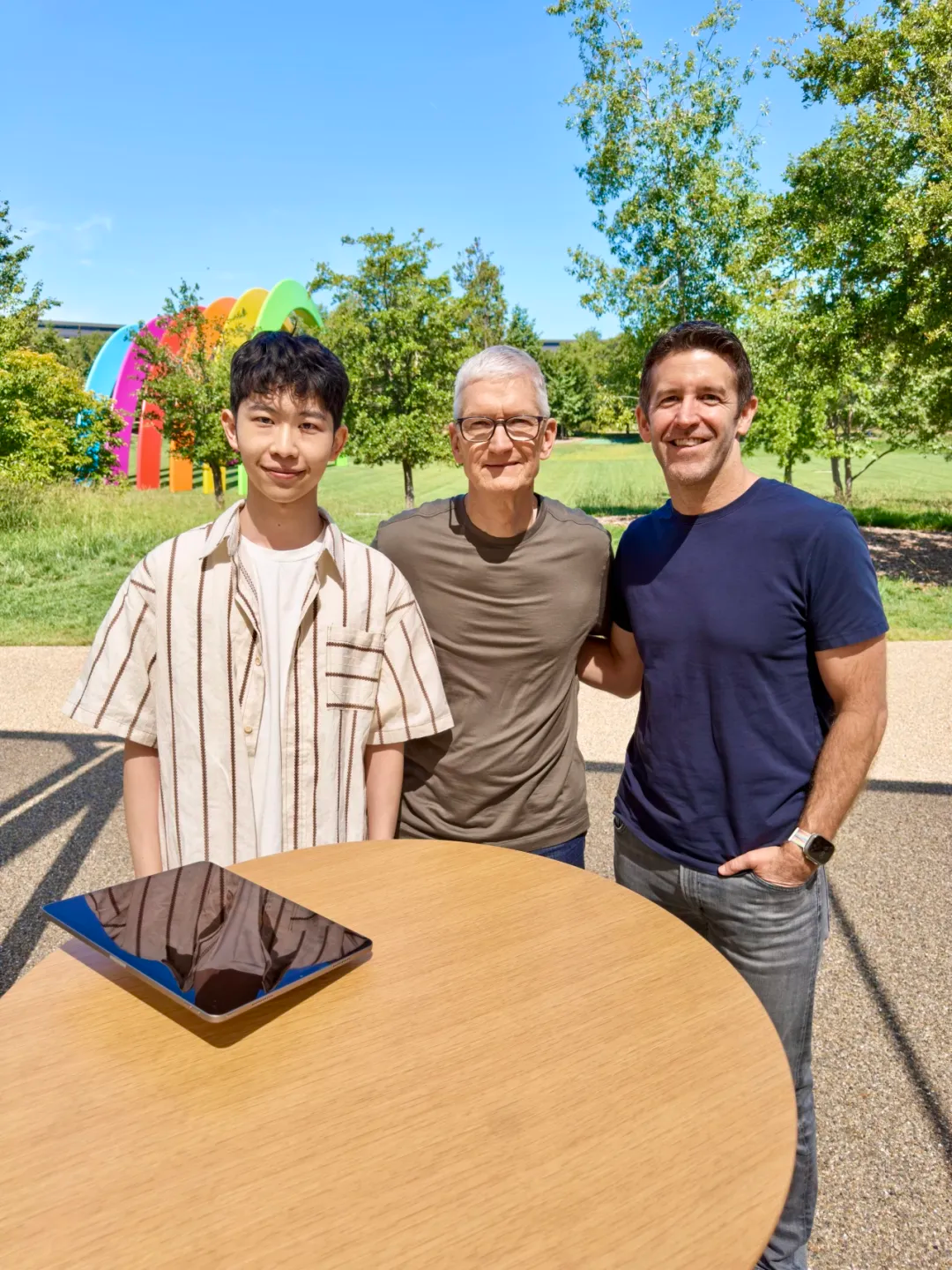
Wu Tianyu with Tim Cook and John Ternus
Wu observed that AI was one of the most frequently discussed topics at WWDC26. Student developers and engineers from different countries and backgrounds spoke extensively about its impact on development processes, product ideation, and creative practice.
These conversations also informed Wu’s own understanding of AI. In his view, AI is changing more than the way code is written; it is also redistributing developers’ attention and creative energy.
AI has already become an important tool in Wu’s development process.
“To put it simply, AI is like my assistant,” he said. “I give it instructions and assign it tasks, and it helps me complete the corresponding work.”
His ability to work with AI did not emerge overnight. Having taught himself app development before mature AI tools became widely available, Wu has experienced the transformation of developers’ working methods particularly clearly.
“When I was teaching myself app development during my first year at university, there were no AI tools,” he recalled. “I had to write code line by line. Whenever I encountered a problem, I searched video platforms for tutorials. If I was not satisfied with the result, I had to figure out how to adjust it myself. In the past, we wrote code line by line; now, we write prompts line by line.”
Developers once had to devote considerable time to the details of programming. As AI tools become increasingly powerful, the central questions have shifted: What problem are you trying to solve? Who are you designing for? What kind of experience do you want to create?
For Wu, the true value of AI does not lie in how much code it can generate, but in whether that output can be integrated into a complete, usable, and meaningful product. He sees AI as a form of leverage: it helps developers work more efficiently and explore new ideas, but human judgment, creativity, and awareness of the problem ultimately determine the quality of the work.
Following the launch of the School’s Apple Swift Coding Club in early 2026, Wu also actively shared his experience with students interested in Swift coding. He placed particular emphasis on how AI tools can support development practice, repeatedly highlighting the importance of well-crafted prompts, aesthetic judgment, and problem awareness.
What he shared with his fellow students was not only development experience, but also an approach that brings together emerging technologies, design judgment, and product thinking.
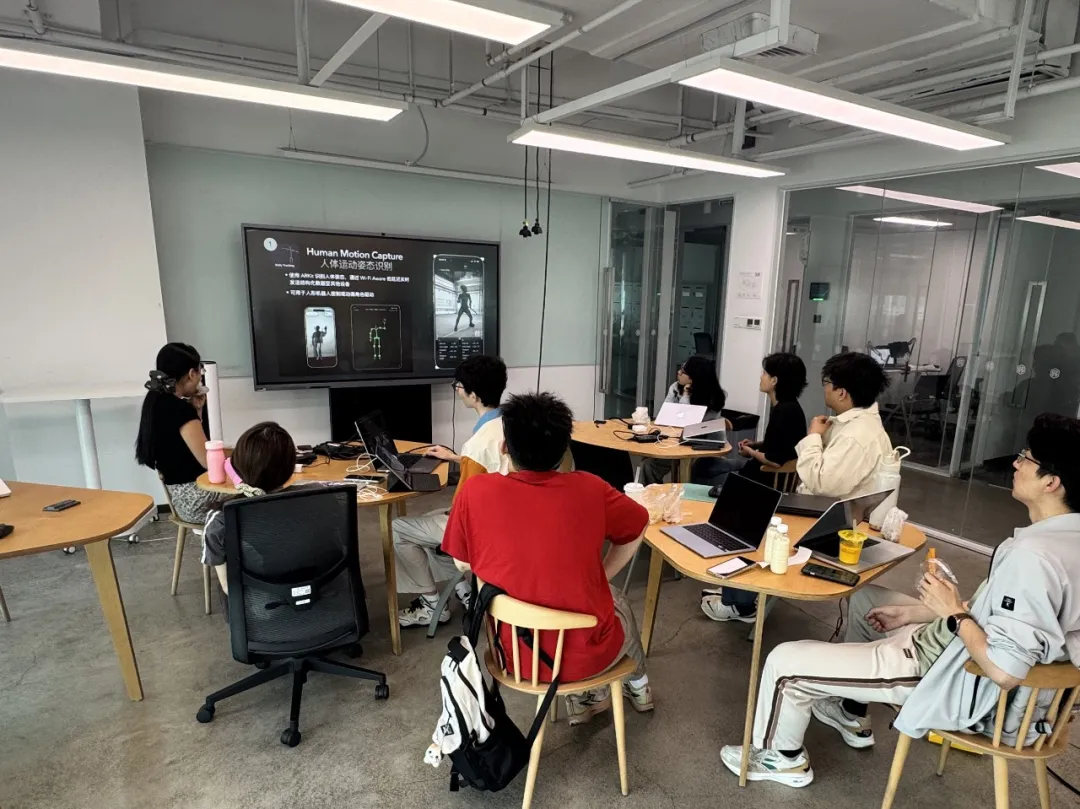
Wu Tianyu sharing his experience with students at the Apple Swift Coding Club
From pursuing a personal interest to undertaking academic research and extending his research ideas into entrepreneurship, Wu’s experience illustrates how students at the SUSTech School of Design are building new connections among technology, design, and social issues.
For this young developer, the award marks only a new beginning. He continues to explore how robots can become easier to understand and use, and how AI can genuinely contribute to innovation.
This article was prepared based on an interview conducted by the School, materials provided by Wu Tianyu, reporting by a Shenzhen Special Zone Daily journalist, and publicly available information.
This article was compiled based on an interview conducted by the School, materials provided by Wu Tianyu, interviews by journalists from Shenzhen Special Zone Daily and Dute News, and publicly available information.
Written by: Zhao Yiran
Reviewed by: Li Xu
Aug 28. 2026 - Latest News
Mar 23. 2025 - Latest News
Apr 21. 2023 - Latest News